The Hidden Price of Being 'Always On': What the Attention Economy Is Really Costing Creators
There's a version of the creator story that gets told over and over. Someone with raw talent, a camera, and a Wi-Fi connection grinds their way to an audience. They post consistently. They engage authentically. They build something real. Then one day, the numbers hit a tipping point and life changes.
That story is true — but it's missing about forty pages of footnotes.
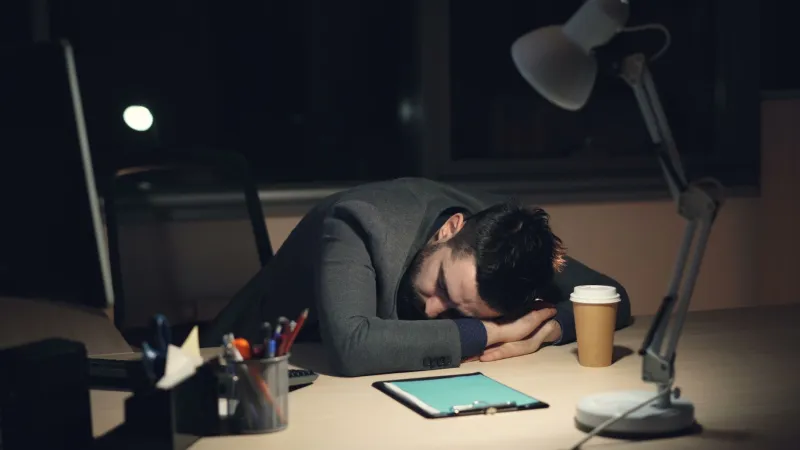
What doesn't make the highlight reel is the part where the same person is lying awake at 2 a.m. checking analytics. Or the part where they're at a family dinner, mentally scripting their next post instead of actually being present. Or the moment — and almost every creator I've talked to has had this moment — where they look at their own content and feel absolutely nothing. Not pride, not excitement. Just a hollow kind of obligation.
That's the attention tax. And it's steeper than most people realize before they sign up.
What We Mean When We Talk About Burnout
Burnout gets thrown around so casually now that it's almost lost its weight. But in the creator context, it's worth being specific about what's actually happening.
Creator burnout isn't just being tired. It's a sustained depletion that hits on multiple levels simultaneously. There's the physical exhaustion of production — writing, filming, editing, scheduling, responding. There's the cognitive load of constantly thinking in content: framing your experiences as stories before you've even finished living them. And then there's the emotional labor, which is the part that rarely gets talked about honestly.
Performing for an audience — even an audience that genuinely loves you — is work. Maintaining a persona, managing comments, absorbing criticism from strangers, and staying relatable while your life is increasingly not relatable is genuinely taxing. Psychologists have a term for this kind of effort: emotional labor. Service workers deal with it. Therapists deal with it. And now, so do creators.
The difference is that most service workers clock out. Creators don't.
The Performance Anxiety Nobody Admits To
Here's something a lot of creators won't say publicly because it feels like a contradiction: the bigger your audience gets, the more terrifying it becomes to post.
When you're starting out, low stakes make experimentation easy. Fifty people watching means fifty chances to try something weird and fail quietly. But once you've got fifty thousand people — or five hundred thousand — every piece of content carries the weight of expectations. Your audience has a mental model of you, and stepping outside that model feels like a risk.
So creators start self-censoring. They stop taking swings. They make the safe version of every idea because the safe version is less likely to cost them followers, sponsorships, or relevance. The creative freedom that drew them to this path in the first place gets quietly traded away for consistency.
That's not a personality flaw. That's a rational response to an irrational system. But it's also a slow creative death, and a lot of people walk away before they figure out how to navigate it.
Why Talented People Quit Before the Tipping Point
The cruel math of audience-building is that the hardest stretch — the one that demands the most from you — is the period before anything is working. You're putting in full effort for minimal return, and the timeline for that stretch is genuinely unpredictable. It could be six months. It could be three years. There's no guarantee.
Most people's breaking point isn't a dramatic implosion. It's quieter than that. They just... stop. They post less. The gaps between content get longer. Eventually the account goes dark and they move on, carrying a private story about how they tried and it didn't work out.
What's rarely acknowledged is that many of those people weren't lacking talent or even work ethic. They were lacking a sustainable operating model. They were running at a pace that was never designed to last, following advice built for platforms that reward volume above everything else.
The system isn't set up to tell you when to slow down. It only tells you to go faster.
What Sustainable Actually Looks Like
Sustainable doesn't mean slow. It doesn't mean low-output or low-ambition. It means building practices that can survive contact with real life — with bad weeks, creative dry spells, health issues, and the ordinary chaos of being a human being.
A few things that actually seem to help:
Separating your identity from your metrics. This sounds simple and is genuinely difficult. But treating your analytics like weather data rather than a report card on your worth as a person is one of the more important mental shifts you can make. Numbers go up and down. They're information, not verdict.
Building in creative work that isn't for the audience. Having a private practice — a journal, a sketchbook, a folder of half-finished ideas nobody will ever see — keeps the creative muscle alive independent of performance pressure. It reminds you why you started.
Defining your own version of 'enough.' The attention economy has no natural ceiling. There's always a bigger creator, a faster-growing channel, a more viral post. Without a personal definition of what success actually looks like for you, you're chasing something that will keep moving. That's an exhausting race to run indefinitely.
Finding community outside your niche. Spending all your social time with other creators in your space is a fast track to comparison spirals and groupthink. Having friends who don't know or care about your follower count is genuinely grounding.
The Long Game Requires a Livable Pace
The creators who last — and I mean really last, not just survive a few trending moments but build something with genuine staying power — tend to share a quality that doesn't photograph well. It's not charisma or hustle or a great aesthetic. It's a kind of stubborn patience with themselves.
They've figured out that the long game isn't about burning bright. It's about staying lit. And staying lit means treating your energy like the finite resource it is, rather than something to be maximized until it runs out.
The attention economy will always want more from you than you have to give. That's not a bug in the system — it's the whole design. The question is whether you're building something on your terms, at a pace that keeps you in the game, or whether you're letting the platform set the tempo until you have nothing left.
Talent gets you to the starting line. Sustainability is what gets you across it.
