The Clock Is Lying to You: Why a Longer Creative Timeline Is Actually Your Biggest Advantage

Somewhere along the way, the entertainment industry got really good at telling a specific kind of lie. It goes like this: talented person shows up, world notices, career explodes. Repeat. You've heard it a thousand times, and if you've been building something of your own for a while, you've probably felt the sting of comparing your timeline to that story.
Here's the thing though — that story is almost never true. It's a narrative convenience, not a documentary.
The Origin Story Is Always a Rewrite
When a creator breaks through, the coverage that follows tends to flatten everything that came before it. The decade of regional theater gets summarized as "paid his dues." The four failed podcasts become "experimented with different formats." The years of playing half-empty rooms get folded into a single sentence about "building a following."
Nobody lies outright. They just compress. And when you're on the outside looking in, that compression feels like proof that someone else moved faster, worked smarter, or simply had something you don't.
But the compression is the distortion. The actual timeline — the real one, with all the waiting and reworking and starting over — is almost always much longer than anyone admits publicly. Adele's debut album came out when she was nineteen, sure. What that story tends to leave out is the years of songwriting workshops, the BRIT School grind, the rejection letters, the demos that went nowhere. The overnight part is a myth. The years before it? Those are the whole story.
Why We Lie to Ourselves About This
It's not just that the media compresses these timelines — we do it to ourselves too, and often for the same reason. A long, messy, nonlinear creative journey is hard to explain at a dinner party. It's hard to pitch. It doesn't fit on a bio page.
So we start telling ourselves a version of our own story that makes it sound more intentional, more direct, more like we always knew where we were going. The side projects that didn't pan out become "exploring options." The years we spent figuring out our voice get quietly omitted. We sand down the rough edges of our own history to match the narratives we see around us.
The problem is that once you start doing that, you lose access to the most useful data you have — which is the actual shape of your own creative development. And without that, it's nearly impossible to make smart decisions about where you're headed.
The Leverage Hidden in Patience
Here's the counterintuitive part: a longer timeline isn't a liability. It's compounding interest.
Every creator who sticks around long enough eventually builds something that shorter-timeline creators genuinely cannot replicate — and that's depth. Not just skill depth, though that matters too. Relational depth with an audience. Thematic depth in the work itself. Institutional knowledge about what works, what doesn't, and why.
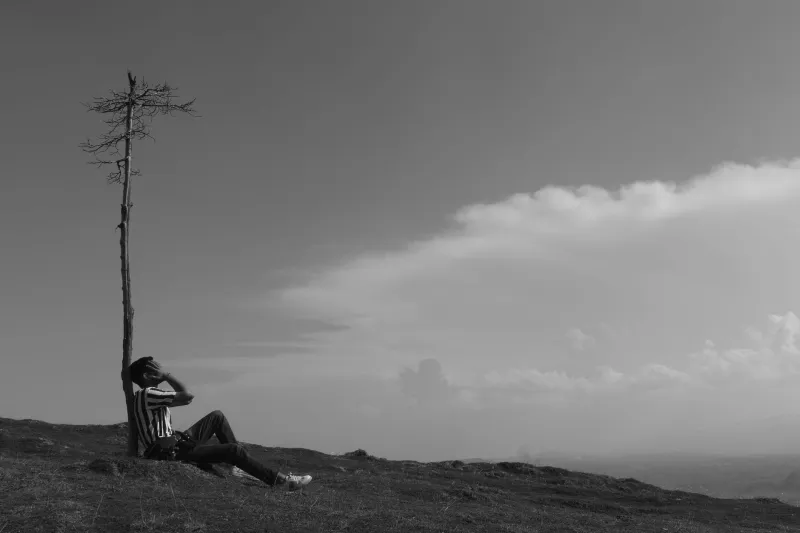
The creators who blew up fast and then disappeared weren't necessarily less talented. A lot of them just hadn't had enough time to build the roots that hold you in place when the wind picks up. Fast growth without deep roots is just a tall tree waiting to fall.
When you accept that your timeline is longer — not as a consolation prize, but as a structural reality of building something real — you stop making decisions based on panic. You stop chasing formats that don't fit you because they're trending. You stop abandoning projects six weeks in because the numbers aren't where you wanted them. You start playing a different game entirely.
False Comparisons Are Expensive
One of the most damaging things a creator can do is benchmark their Chapter 3 against someone else's Chapter 12 without knowing it. And social media makes this almost impossible to avoid.
You see the sold-out tour. You don't see the seven years of 200-seat venues that preceded it. You see the publishing deal. You don't see the four manuscripts that got rejected before the one that landed. You see the viral moment. You don't see the 800 pieces of content that preceded it, most of which got maybe a few hundred views.
When you compare yourself to an incomplete picture, you draw the wrong conclusions. You think the gap between you and them is talent. Or luck. Or connections. And maybe sometimes it is. But more often, the gap is just time — and time is something you actually have.
What to Do With a Long Timeline Instead of Fighting It
First, audit your own story honestly. Not the version you tell at networking events — the real one. How long have you actually been working at this? What did you try that didn't work? What patterns show up across your failures that you've never really sat with?
Second, stop setting deadlines for things that don't have natural deadlines. "I need to be at X level by the time I'm Y years old" is almost always an arbitrary pressure you invented based on someone else's trajectory. Some of the most enduring creative careers started late, pivoted hard, or took a decade to find their footing.
Third — and this is the one most people resist — find something to love about the in-between. Not in a toxic positivity way. Just in the sense of recognizing that the work you're doing right now, even if it feels invisible, is building something. The audience you'll have in five years is being shaped by what you're making today. The skills you'll use on your best project haven't fully formed yet. That's not a problem. That's just how it works.
The clock isn't your enemy. The lie that you're already behind is.