When the Wheels Come Off Live: What Surviving a Public Failure Actually Does for Your Career
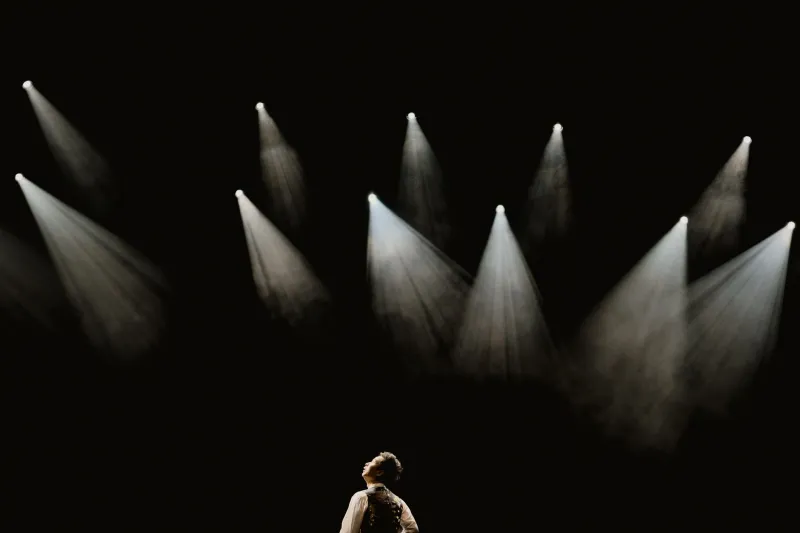
There's a moment every creator knows. The moment you realize — mid-post, mid-performance, mid-launch — that something has gone seriously wrong. Your instinct is to grab a shovel and bury it.
Most people do exactly that.
They delete the tweet. They quietly pull the video. They never bring it up again, hoping the algorithm's short memory saves them. And sometimes it does. But here's the thing: the creators who actually build lasting credibility — the ones audiences keep coming back to years after the hype fades — tend to do the opposite. They stay in the room. They let people see the mess. And then they show the work of cleaning it up.
That's not the same as performing vulnerability. Not even close.
The Difference Between Real Failure and Curated Disaster
Let's be honest about something. There's a whole genre of "I failed" content that isn't really about failure at all. It's a highlight reel in disguise — a polished story about a setback that conveniently ends with a bigger win, packaged with a thumbnail of someone looking thoughtfully into the distance.
Audiences are not fooled. They can feel the safety net underneath those stories. When every "failure" narrative comes pre-wrapped with a lesson and a redemption arc, it stops feeling like honesty and starts feeling like brand management.
Real failure is messier. It doesn't always have a clean takeaway. Sometimes the lesson is "I still don't totally know what went wrong." Sometimes the ending is "I'm still rebuilding." That's exactly what makes it credible — and exactly what most creators refuse to show.
The entertainers who've figured this out understand one thing clearly: audiences don't connect with perfection. They connect with process. Specifically, the process of someone dealing with something hard in real time.
Why Watching Someone Problem-Solve Is More Compelling Than Watching Them Succeed
Think about the last time you watched someone genuinely work through a problem — not explain how they solved it after the fact, but actually wrestle with it in front of you. There's something magnetic about that. It triggers a kind of investment that polished content almost never achieves.
This isn't just anecdotal. Storytelling research consistently points to the same structure: tension creates engagement. When an audience doesn't know how something is going to resolve, they lean in. The moment resolution is guaranteed, they start to drift.
When you share a failure as it's happening — or very shortly after, while the outcome is still uncertain — you're handing your audience something rare: genuine stakes. They're not watching a case study. They're watching a story that hasn't ended yet.
That's a fundamentally different kind of attention. And it builds a fundamentally different kind of trust.
The Framework: When to Share, When to Stay Quiet
None of this means you should live-tweet every setback or turn your platform into a public therapy session. There's real judgment involved in knowing which failures to bring your audience into — and when.
Here's a rough framework that's worth keeping in your back pocket:
Share it when the struggle is about the work, not just about you. If your setback contains something your audience could learn from, relate to, or use — a production problem, a creative block, a launch that flopped despite your best effort — it has value beyond self-expression. If it's primarily personal and doesn't connect to the work, it might not belong on your platform at all.
Share it when you're stable enough to be honest without being reactive. There's a window after a failure where you're too raw to be useful. You'll either overcorrect into self-flagellation or undercorrect into defensiveness. Neither serves your audience. Give yourself enough time to have some perspective — but not so much time that the story becomes polished and safe.
Share the problem-solving, not just the problem. The most compelling version of a failure story isn't "here's what went wrong" — it's "here's what I tried, what didn't work, what I adjusted, and where I am now." Even if you don't have a resolution yet, showing the active process of working through it is what turns a complaint into a narrative.
Keep it private when you're still in the middle of a decision that could be compromised. Some struggles genuinely need to stay internal while you're figuring them out. Business negotiations, team conflicts, legal gray areas — bringing these to your audience before they're resolved can create real problems. Timing matters.
The Trust Compound Effect
Here's what happens when you get this right consistently: your audience starts to believe that when things are going well, you're not hiding something. That's a rarer thing than it sounds.
Most creators have an audience that's always slightly skeptical of the good news — because they've only ever seen the good news. When you've shown people the ugly middle of a failure, your wins carry more weight. They're not just marketing. They're part of a story your audience has been following.
This is the compound effect of credibility. It doesn't happen from one vulnerable post or one honest recap. It happens from a sustained pattern of showing up as a real person doing real work — which sometimes means letting people watch you fall down.
Comedians understand this intuitively. The best ones will bomb in front of a crowd and reference the bomb in the next bit. Not to fish for sympathy — to demonstrate that they're not rattled by it. That composure under pressure is part of what makes the audience trust their timing later in the set.
The same principle applies across entertainment, content creation, and any public-facing career. Audiences aren't just evaluating your output. They're evaluating your character. And character shows up most clearly when things aren't going according to plan.
What You're Actually Communicating
When you fail publicly and handle it well, you're sending a message that no amount of polished content can fake: I'm not here to manage your perception of me. I'm here to do the work.
That's the thing audiences are starving for. Not manufactured authenticity. Not curated chaos. Just someone who's genuinely in it — who cares enough about the craft to keep going when it gets hard, and who respects their audience enough to let them see that.
You don't have to perform your struggles. You just have to stop hiding them when they're actually worth sharing.
The creators who last aren't the ones who never fail. They're the ones who've learned how to fail in a way that makes their audience pull closer instead of pulling away.