Keep It Off the Feed: The Hidden Power of Collaborations Nobody Knows About
Somewhere along the way, we got the idea that creative work only counts if it's visible. Post the studio selfie. Tag your collaborator. Drop the BTS reel. And look — I get it. Visibility matters. Social proof is real. When you're trying to build an audience and establish yourself as someone worth paying attention to, showing your work makes sense.
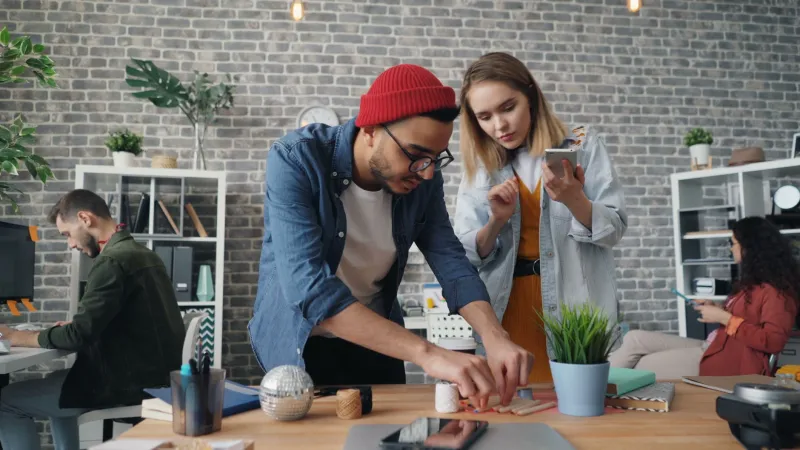
But here's the thing nobody talks about: some of the best creative partnerships alive right now are happening completely out of sight. No announcement posts. No joint Instagram Lives. No "excited to share this collab" tweets. Just two (or more) people in a room — or a Zoom, or a shared Google Doc — doing the actual work.
And in a lot of cases? That privacy isn't a limitation. It's the whole reason the work is good.
The Performance Tax on Creative Energy
When you know a collaboration is going to be public, something shifts. You start making decisions for the audience before the work is even finished. The brainstorm gets a little more polished. The disagreements get smoothed over faster than they should. The weird, ugly, genuinely experimental ideas get filtered out before they ever hit the table — because who wants to look lost in front of an audience?
That filtering costs you something. Not every time, but often enough to matter.
Think about the difference between a conversation you have at a dinner party versus one you have at 1am with a close friend. The dinner party version is fine. Maybe even great. But the 1am version is where the real stuff lives — the half-formed ideas, the honest doubts, the "what if we completely threw out the whole concept" moments that actually move the work forward.
Documenting a collaboration from the jump turns it into a dinner party. You're performing the process instead of living inside it.
Why We Default to Public Anyway
Let's be honest about the pressure. If you're a creator trying to grow — whether that's an audience, a client base, or just your reputation in an industry — every collaboration is also a networking opportunity. Working with someone cool makes you look cool. It signals that you're in the room, that you're trusted, that you're the kind of person other talented people want to create with.
That's not vanity. That's career strategy. And it's legitimate.
The trap isn't wanting visibility. The trap is believing that visibility is always the priority — that if a collaboration doesn't get documented, it somehow didn't happen, or worse, that it didn't matter.
Some of the most influential creative relationships in entertainment history were famously private. Songwriting partnerships that lasted decades without ever becoming a public-facing brand. Directors and editors who shaped entire careers together without either of them ever doing a joint press tour. The work spoke. The relationship didn't need a spotlight to be real.
A Simple Framework for Deciding What Goes Public
Not every collaboration is the same, and not every one deserves the same treatment. Here's a rough framework I find useful:
Go public when the collaboration IS the story. If the reason the project is interesting is partly because of who made it together — different backgrounds, unexpected pairing, community-building intent — then the partnership itself adds meaning. Share it.
Stay private when the process needs room to breathe. Early-stage work, experimental projects, anything where you're genuinely figuring it out as you go — these often need protection. Announcing them prematurely creates external expectations that can warp the creative decisions you make internally.
Ask what the other person actually wants. This one gets skipped constantly. Your collaborator might not want their name attached to something unfinished. They might be protective of their process in ways you aren't. A quick honest conversation about visibility expectations before you start saves a lot of awkward moments later.
Consider whether the audience adds anything. Sometimes bringing people along for the ride genuinely enriches the work — community feedback, shared investment, a sense of co-creation. Other times the audience just adds noise. Know which situation you're in.
The Long Game Argument for Privacy
Here's a counterintuitive truth: keeping some collaborations private can actually make your public ones land harder.
When everything gets documented, the documentation loses meaning. It becomes wallpaper. But when you're selective — when you only bring people inside the work when there's a real reason to — the moments you do share carry weight. Your audience learns that when you're excited enough to talk about something, it's actually worth paying attention to.
There's also a creative sustainability argument. If every collaboration becomes a content opportunity, you're adding a layer of labor to every creative relationship you enter. That gets exhausting. It can make you subconsciously avoid certain partnerships because the overhead feels too high. Giving yourself permission to have creative relationships that exist entirely for the work — with zero content obligation attached — keeps you in the game longer.
What Private Work Does for Your Craft
Beyond strategy, there's something worth naming about what happens to your actual skills when you work without an audience watching.
You take more risks. You stay in the discomfort longer. You let the other person be right more often, because there's no ego on the line in front of a crowd. You experiment with approaches you'd never try if you knew people were watching — and sometimes those experiments are exactly where the breakthrough lives.
I've seen creators do their most technically impressive work in public and their most emotionally honest work in private. The private stuff is almost always more interesting. It's messier, yes. But it's alive in a way that the polished, documented version often isn't.
You Don't Have to Choose One or the Other
None of this is an argument against ever sharing your collaborative process. The point isn't to go underground — it's to be intentional. To stop defaulting to "document everything" as though that's the only responsible creative move.
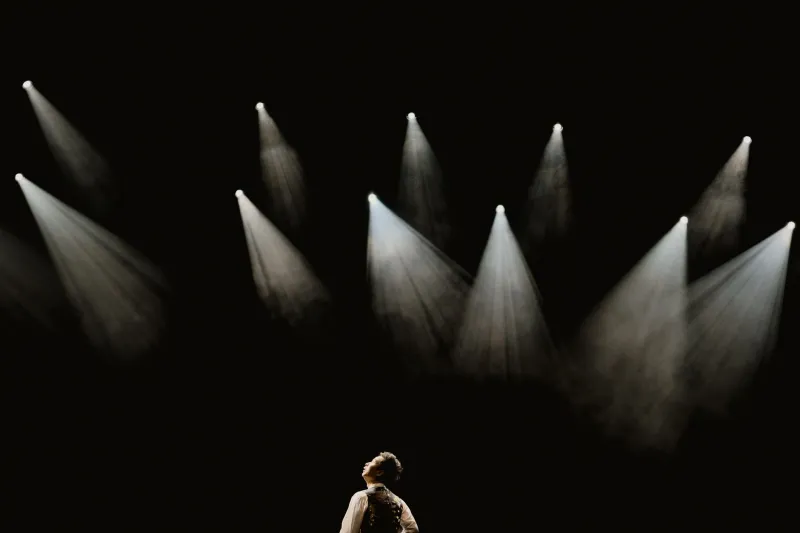
Some of your collaborations should absolutely live on your feed, in your portfolio, in the story you're telling about who you are as a creator. Those partnerships deserve the spotlight.
But some of your best work might be happening in a back-and-forth email thread that nobody will ever read, or in a rehearsal room where the phones are face-down on the table. And if that's where the real creative fire is — protect it. Let it stay private. Let it be yours.
The work will show eventually. It always does.