When the Dream Collab Becomes a Career Detour
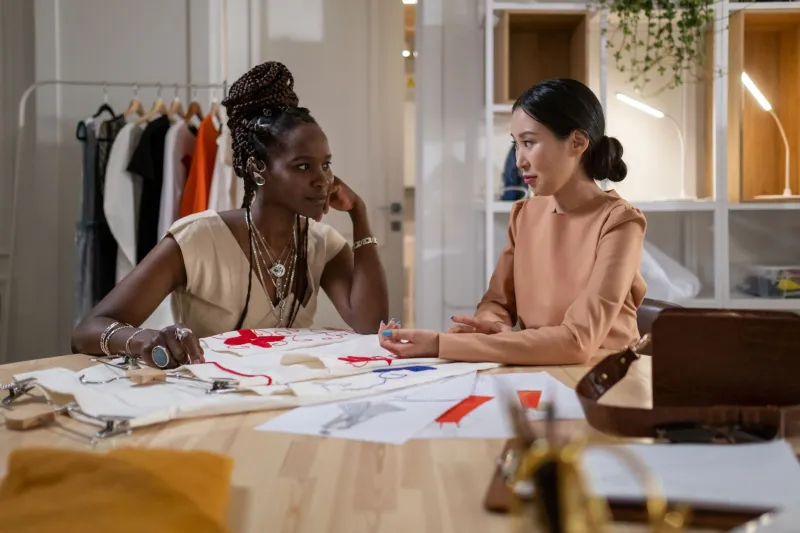
Let's say you've been grinding for a couple of years. Your audience is small but loyal. Your voice is starting to sharpen. You're figuring out your lane. And then — out of nowhere — someone you've admired for a decade slides into your DMs and says they want to work together.
Your stomach drops. In a good way. Obviously you say yes.
Except... maybe you shouldn't have.
This isn't a contrarian take for the sake of it. It's something a lot of creators discover the hard way, usually about six months after the collab goes live and they're left wondering why their momentum stalled. The opportunity looked like a rocket ship. Turned out it was someone else's rocket ship — and you were just along for the ride.
The Allure Is Real, and That's the Problem
There's a very specific kind of pressure that comes with a high-profile collaboration offer. It's not just excitement — it's social pressure, ego, and FOMO all bundled together. Your peers would kill for this. Your parents would finally understand what you do. The internet would notice.
And because the stakes feel so high emotionally, it becomes almost impossible to evaluate the opportunity clearly. You're not asking does this serve my creative direction? You're asking how fast can I clear my schedule?
That's the trap. The bigger the name attached to the opportunity, the harder it is to think straight about whether the project actually aligns with what you're building.
Consider the YouTuber who spent two years building a niche around thoughtful, slow-burn documentary content — then agreed to appear in a high-energy reaction channel collab because the creator had 8 million subscribers. The video performed fine. The bigger creator's audience didn't follow over. And the YouTuber's own community felt a weird tonal whiplash that took months to recover from. The collab made sense on paper. On the ground, it muddied everything.
You're Not the Main Character in Their Story
Here's something worth sitting with: when you collaborate with someone significantly more established than you, whose story does the project tell?
More often than not, it's theirs.
This isn't malicious — it's just math. They have the bigger platform. They set the creative direction. Their audience is the primary audience. You're a supporting role in a project that lives on their channel, under their brand, in service of their narrative arc. And that's fine, if you go in knowing that.
The problem is when creators convince themselves they're co-authoring something, when really they're lending credibility or novelty to someone else's machine. Your voice gets filtered through their framework. Your ideas get adjusted to fit their format. By the time the project ships, it doesn't really sound like you anymore.
And audiences notice. Maybe not consciously, but they feel it.
The Framework Worth Actually Using
Before you say yes to any collaboration — dream collab or otherwise — run it through these four questions. Not quickly. Actually sit with them.
1. Does this project exist in a world where my work matters? Not just your name on the thumbnail. Does the project give your actual creative perspective room to breathe? Or are you essentially a prop?
2. Would I be proud of this in five years, independent of how it performs? Views fade. Buzz fades. What you actually made doesn't. If the answer is I'd be a little embarrassed but the exposure would be worth it — that's a no.
3. Does their audience overlap with the audience I'm trying to build? A massive audience that has zero interest in your work isn't a growth opportunity. It's noise. The best collabs bring you into contact with people who were already primed to care about what you do.
4. What does this cost me — in time, creative energy, and brand clarity? Every project you say yes to is a project you don't build for yourself. That's not a reason to say no to everything, but it's a reason to be honest about the trade-off.
Saying No Is a Creative Act
This is the part that doesn't get talked about enough: declining a high-profile opportunity can be one of the most powerful moves you make.
It signals — to yourself and to your audience — that you know what you're about. It keeps your creative thread intact. And it tends to attract better-fit opportunities down the line, because your work stays coherent instead of becoming a scattered collection of other people's projects.
Some of the most distinctive voices in entertainment built that distinction partly through what they refused to do. The comedian who turned down the obvious network sitcom because it wasn't the show they wanted to make. The filmmaker who passed on the studio sequel to develop something smaller and stranger. In the moment, those decisions looked risky. In retrospect, they look like integrity.
You don't have to be precious about it. You're not above collaboration — that's not the point. The point is that collaboration should be a tool you use deliberately, not a ladder you grab at because someone dangled it near you.
The Collabs That Actually Move the Needle
For what it's worth, the partnerships that tend to genuinely accelerate a creator's career share a few things in common. They're usually between people at roughly comparable stages — not a massive power imbalance. The creative direction is genuinely shared. Both parties bring something distinct to the table, and both leave with something they couldn't have made alone.
Those collabs feel different in the finished product. You can hear two real voices in them, not one voice and an echo.
That's the version worth waiting for. Not the one that looks impressive in a headline, but the one that actually pushes your work somewhere new.
The Bottom Line
Your creative trajectory is yours. It's the one thing in this industry you actually own. And it's surprisingly easy to hand pieces of it over — to a bigger name, a shinier project, a number that looks good in your analytics.
Before you do, make sure you know what you're trading. Sometimes the dream collab is exactly what it looks like. Sometimes it's a very flattering detour.
Knowing the difference before you sign on is the whole game.